Wednesday, 18 October 2017

Camera Settings & Composition

Composition: composition is the placement or arrangement of visual elements or ingredients in a work of art.


Rule of Thirds: The rule of thirds makes use of a natural tendency of the human eye to be more strongly drawn towards certain parts of an image.

Rule of Thirds in Photography:


Triangular Composition in Photography:


Negative Space in Photography:


Camera Settings:


ISO

The letters ISO on your digital camera settings refer to the sensitivity of the sensor to light.
Low ISO value = low light sensitivity and high image quality.
High ISO value = high light sensitivity, lower image quality.
An ISO value of 100 or 200 is suited to photographing in sunny conditions
An ISO value of 400 or 800 is suited to photographing in cloudy conditions or dusk/dawn
An ISO value of 1600 or higher is suited to low light conditions, e.g.darkened rooms, night photography.

Effect of Digital ISO setting on image quality


Aperture.
The aperture adjusts the size of the opening through which light passes to the image sensor.

Note: The main f stops in your camera are 2.8,4.0, 5.6, 8,11,16,22, 32.  for each increase in f stop value the amount of light entering the camera is reduced by a half.

The aperture adjusts the size of the opening through which light passes to the image sensor.
The aperture can be opened up to let in more light or closed (stopped down) to let in less. In respect to just exposure, smaller apertures let less light strike the image sensor so the image is darker. Larger apertures let in more so it's lighter.
To attain the right exposure for a given aperture setting adjust the shutter speed.  E.G. if the image is over exposed (as indicated by the camera exposure meter) increase the camera shutter speed until the exposure meter indicates a correct reading.


Shutter speed.
Shutter speed means timing and duration of opening and closing of the shutter curtain at the back of the camera. A fast shutter speed will freezes action while slower speed creates blurring effect.
1/500  1/250  1/125  1/60  1/30  1/15  1/8  1/4  1/2      1

The main ISO in camera settings are AUTO, 100, 200. 400, 800, 1600, 3200, 6400.
The main aperture settings are
The main shutter speeds are 30", 15", 8", 4", 2", 1", 1/2, 1/4, 1/8, 1/15, 1/30, 1/60, 1/125

Thursday, 12 October 2017

Form

Form


Definition & Theory


• Form is a three dimensional shape, such as a cube, sphere or cone.
• Sculpture and 3D design are about creating forms.

• In 2D artworks, tone and perspective can be used to create an illusion of form.

Edward Weston, Pepper, 1930


Edward Weston's image of the pepper represents three dimensional photography. The tone and shape of the image looks sculptural, and has connotations of a human like muscle figure. If the image was taken in colour, it may have been easy for someone to denote what this image is. Because it was taken with black and white film, it makes it harder for people to know what the object is.

Jonathan Knowles


This image taken by Jonathan Knowles widely contrasts the image taken by Edward Weston. He has chosen to photograph a more conventional shape, rather than an abstract object like Weston did. The tone of the image, with one side of the pyramid being darker than the other, depicts the three dimensional form of the image. The flowers look artificial, which could connote this in the image.

Research (of artists and techniques) 


Tina Modotti

Tina Modotti (August 16th / 17th 1896 – January 5, 1942) was an Italian photographermodelactress, and revolutionary political activist for the CominternModotti was introduced to photography as a young girl in Italy, where her uncle, Pietro Modotti, maintained a photography studio. Later in the U.S., her father briefly ran a similar studio in San Francisco. While in Los Angeles, she met the photographer Edward Weston and his creative partner Margrethe Mather. It was through her relationship with Edward Weston that Modotti developed as an important fine art photographer and documentarian.


All of the above images were photographed using black and white film. They are all similar and it is clear that she has his own photographic style when it comes to creating images and putting together his compositions. A lot of her images are of hands, or of the physical form. This shows her specific photography style, but also could suggest that she aims to tell a story through her compositions of people. I gained inspiration from this by producing my own images based on hands or the physical form, and then further editing them into black and white using Photoshop.

Image Bank

The following images were added as part of my visual research.


The above pictures are a collection of photographs that represent the visual element of form. These are also images that I felt that I could recreate well myself for 'form'.


(AO1:  You must ensure that several of the visual ideas/inspirations within the image bank are pursued.)

Selected Images

Contact sheet(s)


My Best Images (target 4 - 6)


Images that require improvement. 

(AT LEAST 2 IMAGES)


There were two images that I selected that needed improvement for a variety of reasons. The first image that I selected I decided needed improvement because I felt as though I needed to get closer to the mannequin in order to really show the detail of its form. Additionally to this, due to this photo being taken from outside looking in, shadows were in the way and there was a lot of reflection from the outside, meaning that I wasn't able to get the image as detailed as I would have liked. If I was to improve this image, I try and minimise the amount of reflection and possibly get closer to the mannequin to enhance the form of the composition.

The second image I selected that needed improvement because I had the flash on when taking the image, and it would have been better if I had turned the flash off to prevent the flash shining back into the image. You can also see that the reflection from the image is showing and it is not in focus. If I was to improve on this image, I would 


AO3: Record ideas, observations and insights relevant to intentions, reflecting critically on work and progress.

The main idea that I had and the main reason for creating images of form was that I felt that throughout Harlow and within my own home and environment, there are various different places and various different objects that convey form in a strong way. Some are more traditional and others are presented in a much more abstract way, and I felt I was going to be able to capture this well using both natural and studio lighting. I tried to relate some of my images to my artist research however I think I could develop on this further as looking back, I could have used coloured backgrounds and other objects to present the formal element of form.

The images that I retrieved from my time exploring Harlow and exploring my own enviroment turned out well and I felt that overall, I captured the visual element of 'form' well. However, due to still learning about my camera in manual mode, there were certain aspects of my work that I felt could have been improved due to not knowing a lot of the camera settings.

With reference to the Best selected images... 

The image that I took of the globe was taken in the studio using a focused light on the globe itself to create the form of the shadow, and also to create a dark to light effect on the object. My camera settings were altered so that the form would be the main focus of the image and that the image will not be flooded with too much light and take away from the form of the image, which could potentially ruin the image.

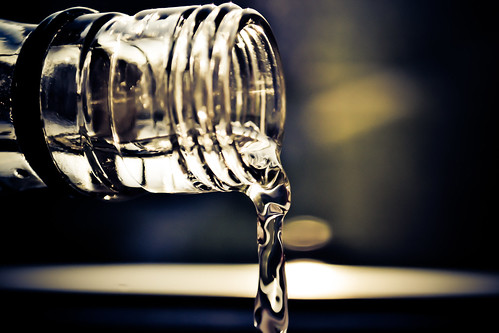
The image of the top of the water bottle was taken at my house with an everyday object, with the light shooting directly towards the centre of the bottle. This accentuates the shadows within the image and allows the form of the bottle top to come through. It shows a mixture of form, including the bottle cap and the water within the bottle.

The image of the banana and apple together I decided to take as it related to one of my pictures within my image bank. A lot of the research I had done on form showed that a lot of photographers tended to take pictures of fruit when trying to capture form within an image. When taking this image, I tried to focus on making the fruit central within the composition, as this is the style that most reflects the style of the image within my image bank.

The two images that I chose as my images that needed improvement were images that I felt that I could take again and work on the composition of the image. I would change the angle of the light in order to accentuate the form present with the image.

AO2Explore and select appropriate resources, media, materials, techniques and processes, reviewing and refining ideas as work develops.

For all of the above images, I used a CANON EOS 1300D. I have not used my camera a lot before in manual mode, so I feel as though I could still learn a lot about the different settings and that this would improve on my image compositions in a hugely positive way. For most of these images, the flash was on using soft boxes and radio flashes due to the fact I was shooting in the studio.

In order to improve on the images that I took, I decided to import them into Photoshop in order to enhance them and improve on their composition and the way that they have been shot. In order to do this, I decided to put them into black and white in order to accentuate the contrast and tone within the image.


The screen grabs that I have selected show how I used Photoshop to create a high contrast black and white image. To do use this, I used the Curves tool and the Black and White tool, gradually adjusting the colour sliders to get the clear contrast effect. With one of the images, I chose to try out editing in colour, adjusting the contrast and brightness of the image.


AO1: Develop ideas through sustained and focused investigations informed by contextual and other sources, demonstrating analytical and critical understanding. 
The artist research that I did was extremely helpful in the fact that I was able to gain an understanding of the different artists and their different styles. Knowing about when they were born and where they were born helps me to interpret their work and understand what they were thinking when they took a certain image. Researching images that they have created helps me to try and recreate these images and then shooting my own images in their style. For example, my research on Tina Modotti and researching the images of Edward Weston helped me to choose to take photos in black and white and also to increase the contrast within an image. Additionally to this, I was able to get a better understanding of the visual element 'form' and how different lines convey different emotions and feelings. However, I feel as though I did not relate enough to my research and did not take enough pictures in this style. If I was to improve on this, I would revisit the images from the research and try to recreate them as closely as possible.

AO4:Present a personal and meaningful response that realises intentions and, where appropriate, makes connections between visual and other elements. 
Overall, I think that I have produced a good series of images inspired by my research and image bank of form and composition...  The final images produced were changed by developing the contrast and converting them into black and white images. I think if I was to improve on this, I would try and take photographs that relate more to the artist, as looking back I feel as though I have not fully captured the style of both photographers and I only have one image that fully reflects his style in some way.


Wednesday, 11 October 2017

Tone

Tone 


Definition & Theory

This refers to the lightness or darkness of something. This could be a shade or how dark or light a colour appears.
Tones are created by the way light falls on a 3D object. The parts of the object on which the light is strongest are called highlights and the darker areas are called shadows. There will a range of tones in between the highlights and shadows.
Without tone Form does not exist, tone is therefore an important aspect in the visualisation of 3D objects.


The tonal range of this photo connotes strength and masculinity in the way that it is taken. The dark shadows and tone around the edge of the face accentuate the cheekbones and other elements of the face, showing strong facial features, which could suggest strength and masculinity.


The tonal range of this photo connotes femininity in the way it is taken and the type of lighting that is used. The tone is not very harsh and is soft in most areas, which suggests femininity. The contrast between the dark dress and the soft tone of the skin, and the light reflecting off of the dress could highlight that the image is feminine.
Research (of artists and techniques) 

ANSEL ADAMS

Ansel Easton Adams (February 20, 1902 – April 22, 1984) was an American photographer and environmentalist. His black and white landscape photographs of the American West, especially Yosemite National Park, have been widely reproduced on calendars, posters, books, and the internet. Adams was mostly known for his boldly printed, large format black-and-white images, but he also worked extensively in colour. However, he felt closest to black-and-white photography, which he believed could be manipulated to produce a wide range of bold, expressive tones, and he felt constricted by the rigidity of the color process.


All of the above images were photographed using black and white film. They are all similar and it is clear that he has his own photographic style when it comes to creating images and putting together his compositions. Most of the images that I have selected as examples were taken with black and white film, although he was also known to work with colour film. The use of black and white within the images could have been used to accentuate the tone within the image and show elements of darker and lighter tone.

I gained inspiration from this by producing my own images based on different tonal ranges and then further editing them into black and white using Photoshop.

Image Bank

The following images were added as part of my visual research.

Image result for tone photography

Image result for tone photography

Related image

The above pictures are a collection of photographs that represent the visual element of tone. These are also images that I felt that I could recreate well myself. These images convey various different forms of tone, both dark and light tone.They are also taken with a variety of different angles which I hope that I am able to do within my own work.


(AO1:  You must ensure that several of the visual ideas/inspirations within the image bank are pursued.)

Selected Images

Contact sheet(s)


My Best Images (target 4 - 6)


I selected the following as my best images:

Images that require improvement. 

(AT LEAST 2 IMAGES)


There were two images that I selected that needed improvement for a variety of reasons. The first image that I selected I decided needed improvement because the image was not focused enough. I tried to keep it as still as possible, but because of the adjusted shutter speed I wasn't able to hold it completely still for that period of time. Because of this, a lot of my photos came out blurred, but this is the most blurred photo. I also don't think it shows enough tone within the composition. If I was to improve on this image, I would adjust the shutter speed to make it easier for me to keep still, or I would use a tripod so it would stay in exactly the same position for the same period of time. 

The second image is an image that I felt needed improvement for various reasons. One of these reasons is that I felt that it was too dark to convey tone in the best way. For this image, I used a tripod and adjusted the shutter speed, ISO and aperture so that I would be able to keep my image as focused as possible. However, when connected to the light and the flash, it did not go off, leaving the image with no light and no tone. If I was to improve on this image, I would make sure that the equipment was properly adjusted and connected to my camera, which would improve on this image significantly and create a better depiction of tone.

AO3: Record ideas, observations and insights relevant to intentions, reflecting critically on work and progress.

The main idea that I had and the main reason for creating images of tone was that I felt that throughout Harlow and within my own home and environment, there are various different places and building structures, as well as different objects, that convey tone in an interesting way. Some are more traditional and others are presented in a much more abstract way, and I felt I was going to be able to capture this well. I tried to relate some of my images to my artist research however I think I could develop on this further as looking back, I 

The images that I retrieved from my time exploring Harlow and exploring the enviroment turned out well and I felt that overall, I captured the visual element of 'tone' well. However, due to this being the first time I have used my camera in manual mode, there were certain aspects of my work that I felt could have been improved due to not knowing a lot of the camera settings.

With reference to the Best selected images... 

The image that I took of the glass chess set was taken by placing this chess set onto the light box, and sending the light in an upward direction to create shadow which therefore creates good tone for the image. My camera settings were altered so that the tone would be the main focus of the image and that the image will not be flooded with light, which would not accentuate the tone within the image and could potentially ruin the image.

The image of the leaves and different objects was taken using a lightbox with the light shooting upwards. This accentuates the shadows within the image and allows the tone of the different objects to come through. The heavier objects (such as the shells) have more dark tones, whereas the lighter objects (such as leaves) allow more light through and show a softer tone.

The image of the leaf I decided to take as I felt that it linked well to the photography work of Ansel Adams. A lot of the research I had done on him and his work showed that he took many pictures of natural things, in particular flower leaves and leaves from trees. When taking this image, I tried to focus on the leaf itself and make it central within the composition, as this is the style that most reflects the style of Ansel Adams.

The image of Corey taken in the studio was taken in the style of the Marilyn Monroe photo with the soft tonal range of the lighting. Rather than having harsh lighting, the softboxes used gave the image a soft light, which connotes softer feelings rather than the harsh lighting, which connotes harder feelings but also an aspect of masculinity.

The two images that I chose as my images that needed improvement were images that I felt that I could take again and work on the composition of the image. I would change the angle of the light in order to accentuate the tone present with the image. 

AO2Explore and select appropriate resources, media, materials, techniques and processes, reviewing and refining ideas as work develops.

For all of the above images, I used a CANON EOS 1300D. I have not used my camera a lot before in manual mode, so I feel as though I could still learn a lot about the different settings and that this would improve on my image compositions in a hugely positive way. For most of these images, the flash was on using soft boxes and radio flashes due to the fact I was shooting in the studio.

In order to improve on the images that I took, I decided to import them into Photoshop in order to enhance them and improve on their composition and the way that they have been shot. In order to do this, I decided to put them into black and white in order to accentuate the contrast and tone within the image.


The screen grabs that I have selected show how I used Photoshop to create a high contrast black and white image. To do use this, I used the Curves tool and the Black and White tool, gradually adjusting the colour sliders to get the clear contrast effect.


AO1: Develop ideas through sustained and focused investigations informed by contextual and other sources, demonstrating analytical and critical understanding. 
The artist research that I did was extremely helpful in the fact that I was able to gain an understanding of the different artists and their different styles. Knowing about when they were born and where they were born helps me to interpret their work and understand what they were thinking when they took a certain image. Researching images that they have created helps me to try and recreate these images and then shooting my own images in their style. For example, my research on Ansel Adams helped me to choose to take photos in black and white and also to increase the contrast within an image to rather than just at the normal central angle used for most images. Additionally to this, I was able to get a better understanding of the visual element 'tone' and how different lines convey different emotions and feelings.

AO4:Present a personal and meaningful response that realises intentions and, where appropriate, makes connections between visual and other elements. 
Overall, I think that I have produced a good series of images inspired by my research of tone, composition and the images of Ansel Adams to an extent...  The final images produced were changed by developing the contrast and converting them into black and white images. I think if I was to improve on this, I would try and take photographs that relate more to the artist, as looking back I feel as though I have not fully captured the style of both photographers and I only have one image that fully reflects his style in some way.